
Last Updated: November 3, 2026
Quick Summary
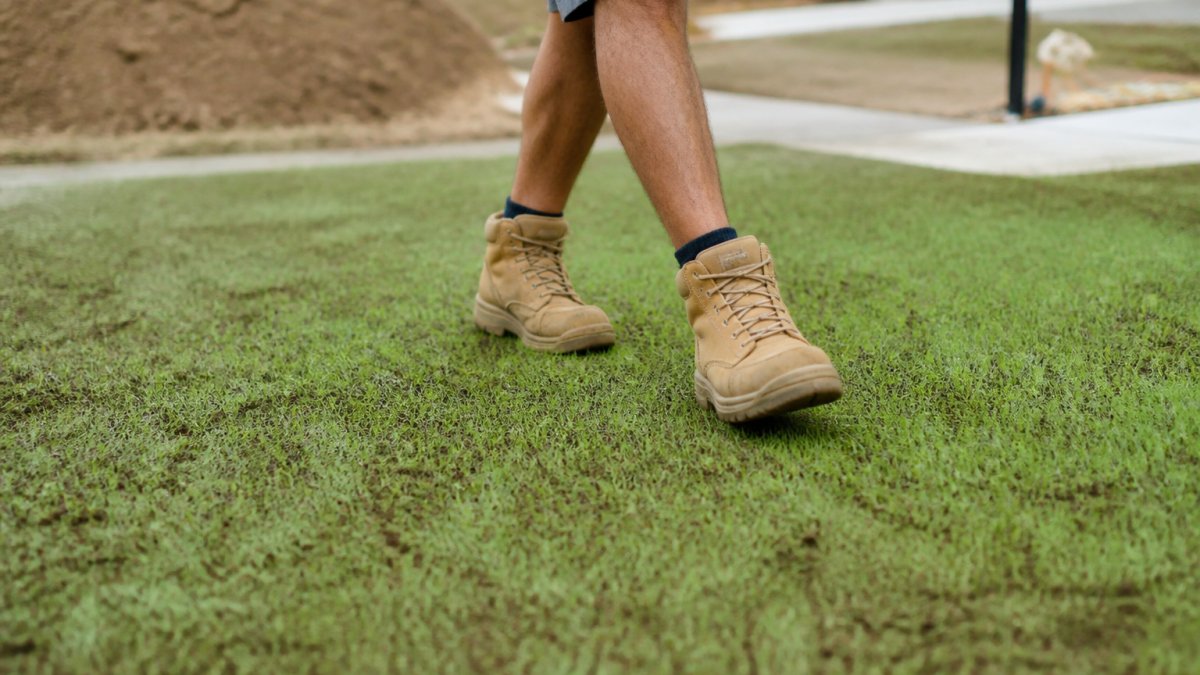
No, walking on hydroseed after two weeks should not be done lightly. Most establishment guidance puts the traffic-free window at four to six weeks, and two weeks is still inside the fragile stage. At that point seedlings are germinating and rooting into the soil surface, with a root system measured in millimetres.
- A 2025 aftercare guide recommends staying off hydroseeded lawn for at least four to six weeks.
- Foot traffic compresses the mulch crust, squeezes air from soil pores and shears fine root hairs.
- Water two to three times daily for the first two weeks, keeping each cycle short.
- The first mow is safe once grass reaches roughly 5 to 7 centimetres and roots hold the soil.
- Rake a compacted spot, top up with light mulch slurry, reseed thinly and keep it damp.
Table of Contents
- When Can You Walk on Hydroseed? The Two-Week Reality
- Why Foot Traffic Damages New Grass
- Your Hydroseed Watering Schedule During Establishment
- When to Mow After Hydroseeding
- Hydroseed Aftercare: Managing Kids, Pets and Daily Life
- How to Tell Your Lawn Is Established Enough to Walk On
- Get a Free Quote for Your Hydroseeding Project
- Frequently Asked Questions
When Can You Walk on Hydroseed? The Two-Week Reality
No, walking on hydroseed after two weeks should not be done lightly. Most establishment guidance puts the traffic-free window at four to six weeks, and two weeks is still inside the fragile stage. This guide explains what is happening under that green surface, and why a quick crossing can cost you growth.

The two-week mark feels safe because the surface looks settled. It isn’t. Seedlings are germinating and rooting into the soil surface, and their root system is measured in millimetres. A 2025 aftercare guide recommends staying off hydroseeded lawn for at least four to six weeks, warning that earlier walking disrupts growth and leaves uneven patches (hydroseed aftercare guidance(EXTERNAL_LINK: hydroseed aftercare guidance | mykalamazoorealestate.com)). That timeline is not Australia-specific, but the biology behind it is universal.
What the 4-6 Week Rule Actually Protects
The four to six week rule protects three things at once: seed-to-soil contact, moisture retention, and the young root system. Walking on hydroseed compresses the mulch slurry layer that holds seed in place. It also crushes seedlings before they can anchor. And it breaks the surface seal that keeps damp soil underneath.
Why Some Advice Says One Day and Others Say Eight Weeks
Advice online ranges from “next day” to “eight weeks” because it describes different situations. Some guidance permits walking once the hydroseed mulch has dried completely and the tackifier has set, but only as necessary.
Those posts skip context. Drying mulch is not the same as an established lawn. If you are coming from a one-day recommendation, expect a very different result than the eight-week advice promises.
Why Foot Traffic Damages New Grass
Foot traffic damages new grass because the root system has not yet knitted the soil together. How to Weigh Up the Downsides of Hydroseeding gives a realistic view of the drawbacks and risks before you commit. At two weeks, you are walking on a thin crust of mulch over loose seed and damp soil. Pressure pushes that crust down, and the damage happens in three layers at once.
The Three Things a Footstep Breaks
First, the mulch crust. The tackifier and paper or wood fibre in the slurry form a surface seal that holds seed in place and slows evaporation. A boot compresses that seal, cracks it, and leaves a smooth, less porous patch that sheds water instead of absorbing it.
Second, the air pores. Seedling roots need air in the soil to respire. Each step squeezes air out of the top few centimetres. Compacted spots then hold less water and less oxygen, so germination slows in exactly the places you stepped.
Third, the root hairs. At two weeks, roots are measured in millimetres and the fine root hairs doing the water uptake shear off under a shoe sole. The seedling may survive but stall, which is why damage often shows up as a patch that is green but stunted rather than bare.
You will often see a topsoil indentation first. Then patchy growth follows, because the seed under your boot never got the same start as the rest.
How Soil Type Changes the Timeline
Soil type shifts the timeline more than most guides admit, because the safe-to-walk question is really a question about how long the surface stays soft and how quickly roots can anchor.
- Sandy soil: drains quickly, so the surface can firm up sooner, but seedlings may become moisture-limited as the profile dries.
- Heavy clay: holds water and stays soft for longer after rain, which can make compaction worse.
- Loam: a balance of drainage and retention, but the root system, not the soil, is the limiting factor for the full window.
A practical approach is to judge the surface by how it feels under a flat hand, not by the calendar alone. If the mulch crust still dents easily or the soil below is cool and damp, the roots are still working and the window is not closed.
Your Hydroseed Watering Schedule During Establishment
Watering is where most people undo good work. Light, frequent irrigation cycles keep the soil surface damp without washing seed away. Lawn tips and hydroseeding advice covers ground preparation, watering and lawn establishment. Deep soaks are the wrong move in the first weeks.
- Water two to three times daily for the first two weeks
- Keep each cycle short, just enough to darken the mulch
- Reduce frequency as germination rate climbs
- Never let the surface dry out completely
- Ease off once seedlings are visibly rooted
When to Mow After Hydroseeding
The first mow is safe once the grass reaches a blade height of roughly 5 to 7 centimetres and the root system holds the soil. For most lawns, that lands around the four to six week mark, not before.
Set the mower high for that first cut. Scalping a young lawn strips the seedling development you just paid for. Keep the blade sharp, and never mow a wet surface.
Hydroseed Aftercare: Managing Kids, Pets and Daily Life
Hydroseed aftercare is mostly about keeping feet and paws off. Kids and dogs do not read the four-week rule, so manage the space instead of the behaviour.
- Fence the area with temporary mesh or tape
- Redirect the dog run to another part of the yard
- Keep a hose reel and path clear so nobody cuts the corner
- Ask visitors to stay on the driveway
- Check the surface after any wet weather
How to Tell Your Lawn Is Established Enough to Walk On
Your lawn is established enough to walk on when three signs line up: turf density covers the soil, the surface no longer gives underfoot, and a gentle tug on a grass blade meets resistance. All three together mean root establishment is done. Most guides stop there, so here is the checklist and the repair plan they leave out.
A Visual Maturity Checklist
Work through these cues in order. If any one fails, the lawn is not ready regardless of the calendar.
- Blade height: consistent growth across the whole area, not just the sunny patches. Uneven height usually means uneven germination, which means uneven rooting.
- Root depth: lift a small corner of turf with a garden fork. Roots should hold the soil in a mat rather than pulling away as loose strands. Shallow, stringy roots mean the lawn is still anchoring.
- Soil firmness: press a flat palm into the surface. It should spring back and leave no dent. A dent that stays means the profile is still soft and compaction-prone.
- Surface seal: the mulch crust should be intact and absorb water rather than pooling it. Cracked or smoothed patches are traffic damage waiting to spread.
- Colour and coverage: even colour with no bare patches. Dormant seed and slow germination shows as thin, patchy growth that will not survive a boot.
A common pattern is that the first two cues pass before the third. Blade height and colour can look convincing at three weeks while the root mat is still shallow, which is why the tug test and the palm test matter more than appearance.
Repairing Accidental Foot Traffic Damage
Repairing accidental damage is straightforward if you catch it early, and this is the part most aftercare guides skip. Work through it in this order:
- Wait for the surface to dry enough that you are not making the compaction worse.
- Rake the compacted spot with a garden rake to loosen the top centimetre and reopen the surface pores.
- Top up with a light layer of mulch slurry over the loosened area, not a thick cap, so seed can still reach the soil.
- Reseed the patch thinly and press it in gently rather than tamping it hard.
- Keep the patch damp with short, frequent cycles and stay off it until it passes the same checklist above.
Watch out: reseeding a compacted patch without loosening the soil first usually fails, because the new seed cannot root into hard ground and the patch simply thins out again after the next dry spell.
If the damage is a single footprint rather than a worn path, the same sequence works at a smaller scale, and the patch often blends in within a few weeks. A worn path needs the full sequence plus a temporary barrier so the repair is not walked on again.
| Stage | Timeframe | Traffic Allowed | Key Risk |
|---|---|---|---|
| Germination | Weeks 1-2 | None | Seed washed or crushed |
| Seedling development | Weeks 2-4 | None | Soil compaction |
| Early establishment | Weeks 4-6 | Minimal, dry only | Patchy growth |
| Established | Week 6+ | Normal use | Scalping on first mow |
Get a Free Quote for Your Hydroseeding Project
Getting the timeline right is easier than fixing a lawn that was walked on too early. If you want a lawn that handles traffic sooner and fills in evenly, professional application with the right seed blends for local conditions does the heavy lifting.
At Hydroseeding, we handle lawn establishment, revegetation and erosion control for homes, new builds, acreage and commercial properties, using seed blends suited to North Queensland conditions.
Get a free quote from Hydroseeding to give your new lawn the best possible start.
Frequently Asked Questions
Can I lightly walk on hydroseed after two weeks?
At two weeks, the seedlings are still fragile and the root system has not knitted into the soil. Most guidance recommends staying off the area for at least four weeks, and some sources say four to six weeks. Light, necessary traffic, such as adjusting a sprinkler, may be unavoidable, but keep it to a minimum and step on established edges rather than the centre. Walking on hydroseed too early risks uprooting seedlings and creating uneven patches.
How can I tell if hydroseed is established enough to walk on?
Look for a dense, even carpet of grass rather than sparse shoots. Tug gently on a few blades: if they resist and hold to the soil, roots have taken hold. The mulch slurry should have broken down and the surface should feel firm underfoot. Visual indicators of maturity include uniform colour, no bare patches and grass that springs back after light pressure. If in doubt, wait another week and keep watering on schedule.
What should I do if I accidentally walk on new hydroseed?
Don’t panic. Rinse any flattened area gently with a light watering to settle disturbed mulch and seed back into contact with the soil. Avoid further traffic for at least another week. Check the spot over the following days for bare patches or irregular growth. If a patch fails to germinate, lightly rough the surface and re-seed or ask your hydroseeding provider about a touch-up application.
When can I mow a hydroseeded lawn for the first time?
Wait until the grass has grown tall enough and the root system holds firmly, which is usually around four to six weeks after application. Set the mower to a high blade height and avoid cutting too much of the blade in a single pass. Avoid mowing when the soil is damp and soft, as the mower’s weight can cause soil compaction and rutting that damages the new lawn.

Leave a Reply